








Palmetto Industries is a certified food grade bulk bags supplier with more than 30 years of experience and a global production network independently audited to BRCGS, IFS Food, and FSSC 22000 food safety standards. Our food contact certified bags are built to protect your product's integrity from filling through discharge, and our team handles the full specification process so you can stay focused on production.
Whether you're packing granulated sugar, wheat flour, spices, or any other dry food ingredient, we match the right bag construction, liner, and certification tier to your product before you commit to an order.
To discuss your food grade bulk bag requirement, contact us now.
Certified food grade FIBC bulk bags for food contact applications
Our food grade bulk bags are manufactured from 100% virgin polypropylene, which meets the specifications established in FDA 21 CFR §177.1520 for olefin polymers used in food contact packaging. Every bag leaves a facility independently audited against at least one globally recognized food safety standard, so the certification behind your packaging is documented, traceable, and verifiable.
Palmetto's production network holds BRCGS, IFS Food, and FSSC 22000 certifications, three of the most recognized standards under the Global Food Safety Initiative framework. Our quality managers are embedded onsite at every partner facility, providing direct oversight from raw resin sourcing through final bag packing.


These production facilities maintain the following protocols on every production run:
- Positive pressure environment: Filtered incoming air prevents airborne contaminants from entering the production space throughout the working day.
- Clean air filtration: Air quality is actively controlled across the full facility, not just at individual filling or sewing stations.
- Light table inspection: Each finished bag passes over a lighted inspection table so foreign matter and fabric defects are identified before packing.
- Metal detection: Every bag is passed through metal detection on a 100% basis, covering the complete production run without exception.
- Strict uniform requirements: Production staff follow controlled gowning and hygiene procedures before entering the production floor.
- Strict hygiene requirements: Documented cleaning protocols and hygiene records are maintained and independently audited throughout the year.
For a plain-language explanation of what BRCGS certification means for your supply chain, our BRC meaning guide covers it clearly. Where BRCGS and SQF overlap or differ, our SQF vs BRC guide walks through the key differences.
- Positive pressure environment
- Clean air filtration
- Light table inspection
- Metal detection
- Strict uniform requirements
- Strict hygiene requirements
How food grade FIBC bags are manufactured
📦 A food grade FIBC bag is not simply a cleaner version of a standard industrial FIBC. It is produced through a specific process chain designed to close off contamination pathways at every stage, from the fabric cutting table through to the sealed, inspected, finished bag.
Our food grade FIBC manufacturing process includes:
- FDA-compliant raw materials: We use 100% virgin polypropylene meeting FDA 21 CFR §177.1520 for olefin polymers intended for food contact, with no recycled content in any food grade production run.
- Air washing: Finished bags are blown out with compressed, filtered air to remove loose threads and particles from the bag interior before inspection takes place.
- Ultrasonic or heat cutting: Fabric edges are sealed at the cutting stage rather than left as raw cut edges, eliminating loose fiber ends that could otherwise migrate into your product.
- Lighted table inspection: Every bag is reviewed individually over a lighted inspection table before packing takes place.
- 100% metal detection: A full detection sweep on every single bag, not a sample-based check at the end of a production run.
- Controlled and sealed packing: Bags are packed in a controlled environment to preserve the hygiene condition built up throughout production.
This level of process control is distinct from standard FIBC production, where sample-based inspection may be used and cleanroom environmental controls are not required. The difference matters when your product is destined for human or animal food consumption and your buyers or auditors require documented process evidence at every step.
💡 Hypothetical scenario: A dry spice processor sources bulk bags from a general FIBC supplier and, during a routine incoming goods check, finds loose polypropylene threads inside several bags from the latest delivery. Switching to a food grade FIBC bag produced with ultrasonic edge sealing and 100% bag-by-bag inspection closes that contamination pathway and provides the documented process evidence the processor's food safety audit requires.
Construction options for food grade FIBC bags
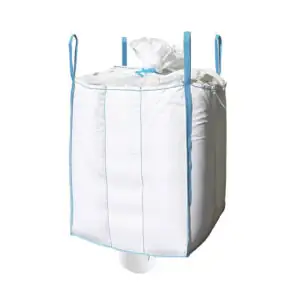
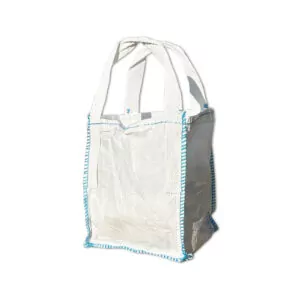
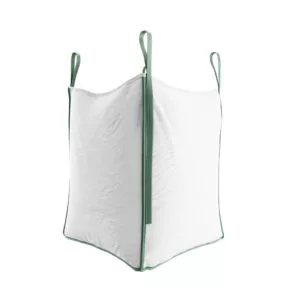
Our food grade FIBC bags are available in every major construction type, each one configurable to your filling line, discharge setup, and pallet footprint. Construction choice depends on your product's flowability, bulk density, and any sensitivity to fine-particle migration through seams or stitching.
- U-panel bulk bags: A three-panel construction that works across the widest range of dry food products and filling configurations.
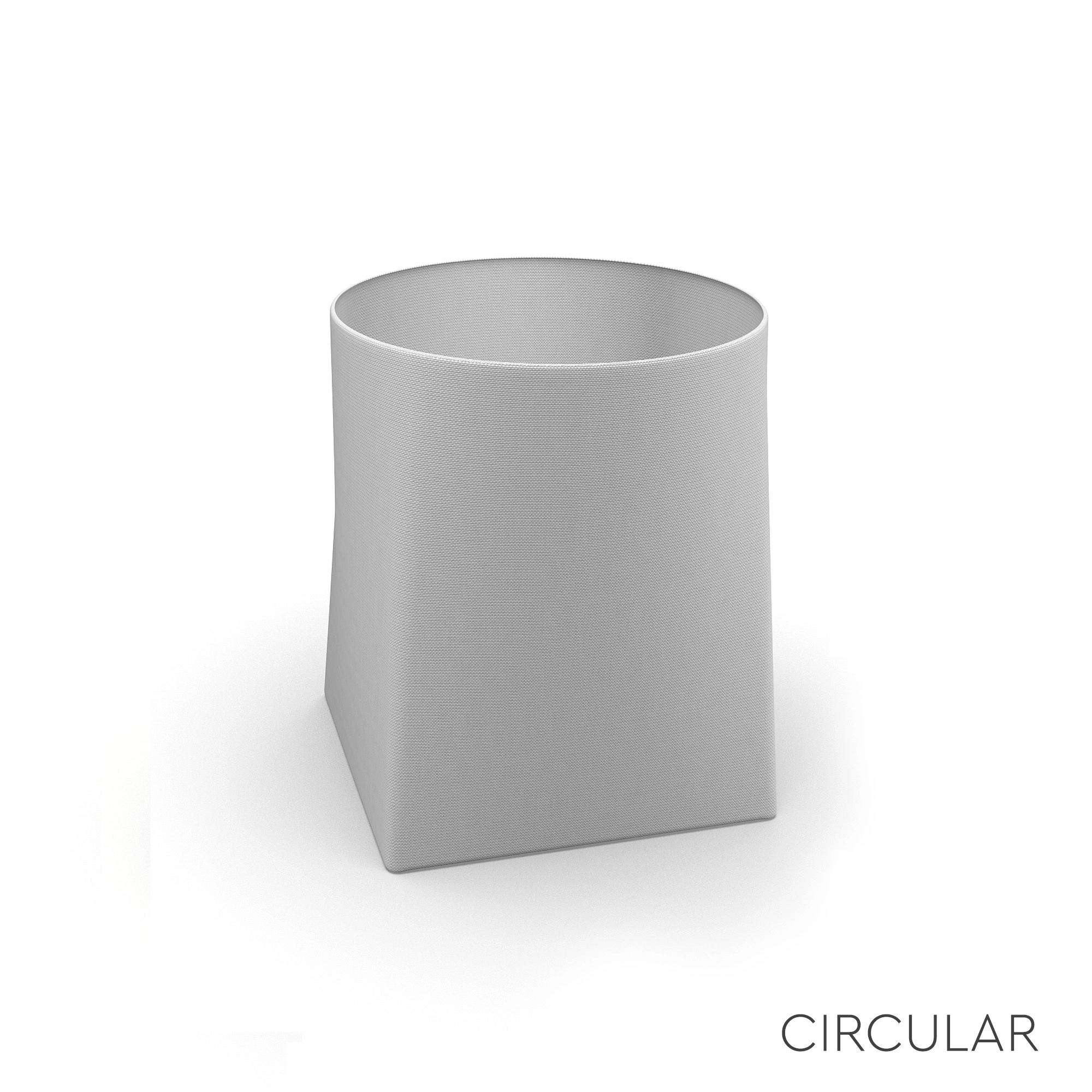
- Circular bulk bags: Woven as a seamless tube, reducing the number of side seams where fine powders can accumulate or migrate over time.
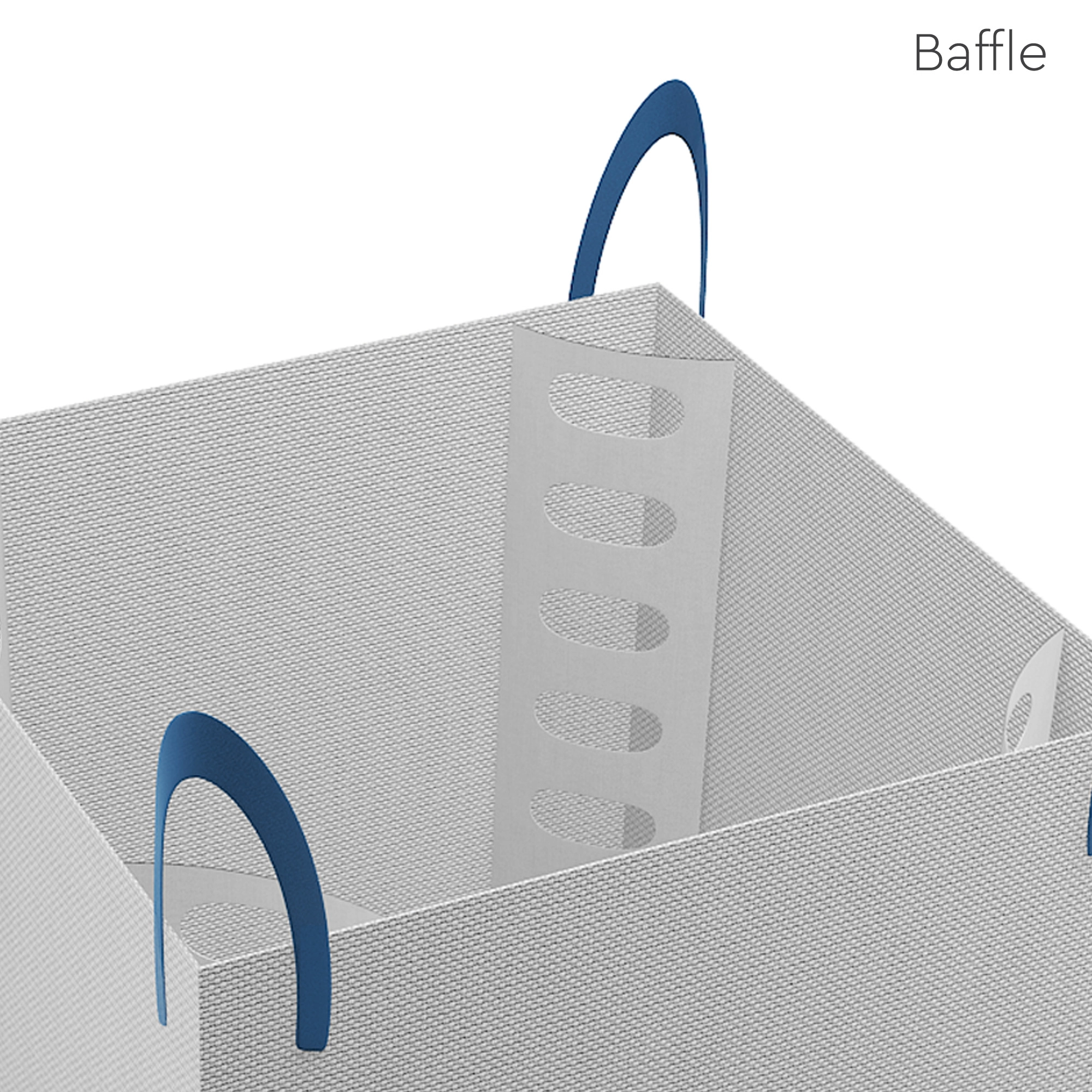
- Baffle bag: Internal panels hold the bag square under load, improving pallet efficiency and container fill rates for high-volume food shipments.
- 4 panel bags: A four-panel construction with strong, defined side walls for products that require a consistent fill profile.
Sometimes referred to as food grade super sacks, these FIBCs meet the same regulatory and certification requirements regardless of the name used in your sector.
Fill and discharge options
Food grade FIBCs are available with a wide range of fill and discharge configurations, matched to your equipment dimensions and process setup. The right combination keeps your operation clean, contained, and efficient at both ends of the bag's working life.
Top fill options:
- Open top: Wide, unrestricted fill access for most dry food products loaded from above.
- Duffle top: A fabric flap closes over the fill opening for added product protection during storage between filling and dispatch.
- Fill spout: A tubular inlet that connects directly to filling heads for dust-controlled, contained filling on automated lines.
Discharge options:
- Flat bottom: Standard gravity discharge suited to free-flowing products that empty cleanly without a controlled outlet.
- Discharge spout: A closeable, controlled outlet for contained, precise product emptying with less dust generation.
- Full drop bottom: Fast, full-batch discharge for products that require a complete, clean release with minimal residue.
Not sure which construction or configuration matches your product and process? Contact us now and our team will work through the specification with you.
Food grade FIBC storage and liner options
🌾 Correct food grade FIBC storage starts before the bag is filled. The product's moisture sensitivity, particle size, bulk density, and storage conditions all affect which construction and liner combination keeps it in specification from point of fill through delivery and discharge.
Our team works through the full product profile with you at the quoting stage, covering fill and discharge method, storage environment, pallet configuration, and any regulatory requirements that you need to follow. That specification process is part of our service, at no additional cost.
Common applications for food ingredients
Food grade FIBCs carry a broad range of dry and semi-dry ingredients across the food supply chain. Common applications include:
- Grain and cereals: Wheat, corn, oats, rice, and similar commodities in large commercial volumes, including our dedicated bulk grain bags built for grain sector requirements.
- Sugar and sweeteners: Granulated, raw, and powdered sugar, where both hygiene control and moisture protection are priorities throughout transit and storage.
- Nuts and peanuts: High-allergen products that require strict segregation and hygiene documentation, including our dedicated peanut bulk bags built to the standards peanut processors require.
- Coffee: Green and roasted coffee at commercial volumes, where aroma and moisture protection matter from origin through roasting, including FIBC bulk bags for coffee beans configured for both green and roasted products.
- Spices and seasonings: Fine, aromatic powders that need sealed, contamination-free environments from filling through to point of use.
- Flour and starches: Ultra-fine powders that require sift-proof seam construction and cleanroom production throughout the full manufacturing process.
For food ingredients moving between multiple points in the supply chain, the food transport vehicle requirements for carrying them can also shape which packaging specification and labeling your product needs.
The table below outlines the liner options commonly used in food grade FIBC storage and the product types each liner suits best.
| Liner type | Best suited for | Primary benefit |
|---|---|---|
| Form-fit polyethylene | Powders and fine granules | Fills and discharges cleanly without product-trapping folds |
| Flat polyethylene | General dry food products | Cost-effective moisture barrier for standard dry goods |
| Foil barrier liner | Moisture or oxygen-sensitive ingredients | Adds an oxygen barrier layer beyond standard polyethylene |
| Aluminum laminate | Coffee, high-value spices, aromatic products | Maximum aroma and oxygen protection for sensitive cargo |
An FIBC liner is specified around your product's moisture sensitivity, storage duration, and any oxygen or aroma protection requirements. Our team recommends the right liner type during the quoting process.
💡 Hypothetical scenario: A specialty coffee importer transports green beans from origin using standard FIBC bags and finds moisture ingress affecting bean quality by the time they reach the roastery. Moving to a food safe bulk bag fitted with a form-fit aluminum laminate liner eliminates moisture contact and protects aroma integrity from origin through storage and onward distribution.
Palmetto: your food grade bulk bags supplier
With more than 30 years of experience and customers across six continents, Palmetto Industries takes the specification work off your hands from the first inquiry. Our team translates your product's properties into a complete food grade bulk bag specification, so you get the right bag for your material, your process, and your compliance requirements, without needing to become an FIBC expert to get there.
Our global production network operates under exclusive capacity agreements with select manufacturing partners, with Palmetto quality managers embedded onsite at every facility. Each bulk bag food certified for direct-contact applications is supplied with the batch documentation and certification records your buyers and auditors may request.
What you can rely on from us:
- Guided specification: We confirm the right construction, liner, certification tier, and configuration for your product before production begins.
- Certified production: BRCGS, IFS Food, and FSSC 22000 certified facilities, backed by onsite Palmetto quality oversight at every partner.
- Palmetto CARE: Our structured quality program means any issue is owned, documented, and resolved at the source, quickly.
- Global warehousing: Strategically placed inventory keeps lead times short and delivery reliable across national and international markets.
- 30+ years of FIBC experience: Three decades supplying food grade packaging to food manufacturers and processors.
Across our global production network, we support clean energy resources and sustainable practices at every partner facility, alongside community investment programs covering housing, food, education, and transportation for workers and their families. We package the planet, and that commitment runs through how we operate, not just what we produce.
Food contact packaging is governed by federal regulations that buyers and auditors reference when qualifying suppliers. When they ask for documented evidence of our certifications and production controls, we provide it as standard.
If your product calls for pharmaceutical-level hygiene controls rather than food grade, our pharmaceutical-grade bulk bags page covers the enhanced cleanroom production and traceability requirements at that tier. For buyers comparing rigid and flexible food-contact packaging options, our food grade plastic containers guide covers the practical differences between the two.
To get the right food grade bulk bag specification for your product, contact us now or call +1 888-252-5331 and our team will take it from there.